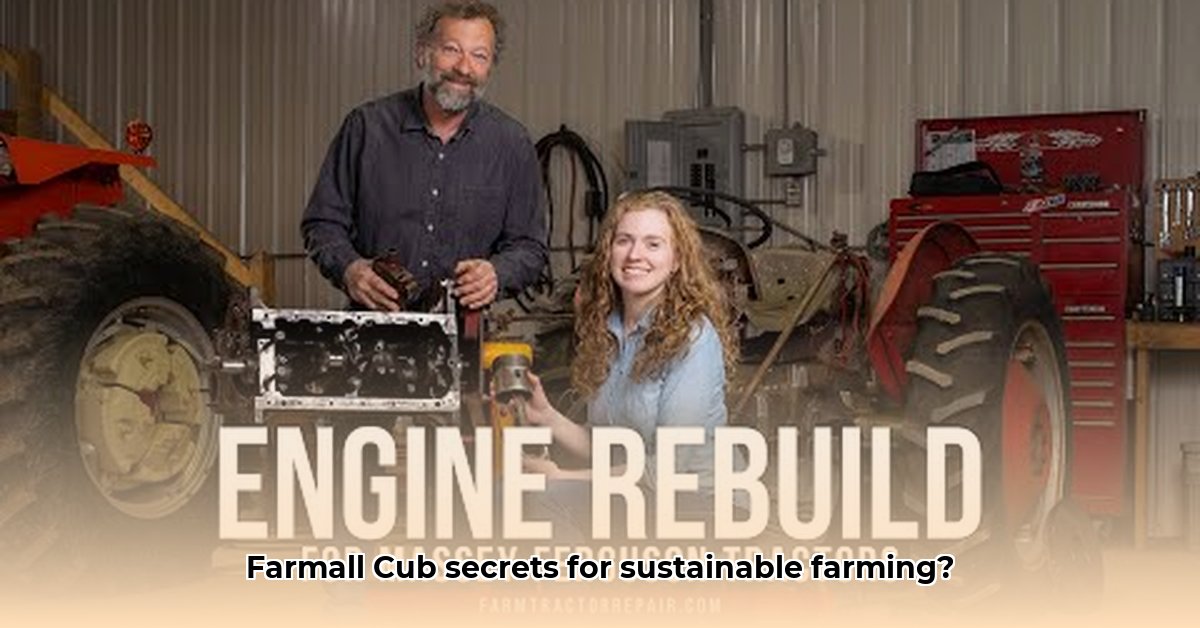
This guide provides practical advice for maintaining and adapting your Farmall Cub tractor for sustainable farming practices. We'll cover troubleshooting, routine maintenance, repairs, and modifications, emphasizing the vital role of Rachel Gingell tractor parts in ensuring your Cub's longevity and efficiency. This guide is designed to empower you to keep your classic tractor running smoothly while minimizing your environmental impact. For more resources, check out this helpful Farmall Cub guide.
Tackling Tricky Farmall Cub Issues: Troubleshooting Common Problems
Many Farmall Cub issues stem from age and neglect, impacting engine performance, transmission shifting, and hydraulic functionality. Let's address these common challenges:
Engine Problems: Diagnosing and Repairing
Is your engine sputtering or lacking power? The carburetor (the part that mixes air and fuel) often needs cleaning or rebuilding. Low engine compression might indicate worn piston rings or valves, requiring more extensive repair. Remember, regular oil changes (using the correct weight for your climate) are crucial. Don't underestimate the power of preventive maintenance! Have you considered the cost-effectiveness of preventative maintenance versus costly repairs?
Transmission Troubles: Shifting Gears Smoothly
Difficulty shifting gears frequently points to worn synchronizers or insufficient lubrication. Check your transmission fluid level immediately; low levels are a frequent culprit. A thorough inspection may be necessary to pinpoint the specific problem.
Hydraulic System Hiccups: Addressing Leaks and Slow Lifting
Slow lifting or hydraulic fluid leaks are common in older tractors. Meticulously check all hoses and seals for cracks or damage. If the issue persists, a complete hydraulic system flush might be necessary – think of it as a major cleaning for your tractor's circulatory system!
Routine Maintenance: Keeping Your Farmall Cub Running Strong
Preventative maintenance is key to extending your Farmall Cub's lifespan and avoiding costly repairs. Here's a simple checklist:
- Oil Changes: Use the correct weight and type of oil (consult your owner's manual). Regular oil changes are fundamental to engine health.
- Fluid Level Checks: Regularly monitor transmission, hydraulic, and coolant levels, topping them off as needed. This simple check can prevent major problems.
- Filter Replacements: Regularly replace your air, fuel, and oil filters. Dirty filters restrict airflow and fuel flow, reducing efficiency and potentially damaging your engine.
- Lubrication: Regularly grease all moving parts to minimize wear and tear and ensure smooth operation.
- Tire Pressure: Maintain proper tire pressure for optimal fuel efficiency and traction. Under-inflated tires lead to increased wear and reduced efficiency.
Regular maintenance significantly reduces the likelihood of major repairs. Have you ever calculated the cost savings associated with preventative maintenance?
DIY Repairs: Simple Fixes You Can Tackle Yourself
Many Farmall Cub repairs are surprisingly straightforward. Let's look at two examples:
Replacing a Spark Plug: A Step-by-Step Guide
- Disconnect: Carefully disconnect the spark plug wire.
- Remove: Use the correct socket wrench to remove the old spark plug.
- Inspect: Check the old plug for wear, cracks, or fouling.
- Install: Install the new spark plug, tightening it securely but not over-tightening.
- Reconnect: Securely reconnect the spark plug wire.
Replacing a Fuel Filter: Another Easy Fix
- Locate: Find your fuel filter (usually along the fuel line).
- Loosen: Carefully loosen the filter housing (fuel can be messy).
- Install: Install the new filter (check orientation in your manual).
- Tighten: Tighten the housing securely, checking for leaks.
These simple repairs, using genuine Rachel Gingell tractor parts where possible, significantly maintain your tractor's operational efficiency. How much time and money have you saved by performing these tasks yourself?
Sustainable Farming with Your Farmall Cub: Integrating Eco-Friendly Practices
The Farmall Cub's compact size is ideal for environmentally conscious farming. Consider these adaptations:
- Alternative Fuels: Explore biodiesel blends (always verify compatibility with your engine).
- Improved Fuel Efficiency: Regular maintenance directly contributes to fuel efficiency.
- Reduced Tillage: The Cub is well-suited for conservation tillage, reducing soil disturbance.
- Precision Farming (Simplified): While full automation may not be feasible, manual techniques can optimize planting and fertilization.
Remember, sustainable farming is a holistic approach. Combine your tractor modifications with crop rotation, cover cropping, and integrated pest management for optimal results. What other sustainable farming practices have you incorporated into your operation?
The Rachel Gingell Tractor Parts Quest: Finding the Right Parts
Locating parts can be challenging, but here's how to find them:
- Online Tractor Forums: Join online communities; other Farmall Cub owners are valuable resources.
- Specialty Tractor Parts Suppliers: These businesses specialize in older tractor parts, often carrying hard-to-find items.
- Salvage Yards: You can find affordable used parts at tractor salvage yards.
Remember safety first! Always wear appropriate safety gear when working on your tractor. If you’re uncomfortable with a repair, seek professional help.
Conclusion: Your Farmall Cub and a Greener Future
With the right care and genuine Rachel Gingell tractor parts, your Farmall Cub can be a valuable tool for sustainable farming for many years. Combine practical maintenance, smart repairs, and environmentally conscious farming practices, and your Farmall Cub can play a vital role in building a more sustainable future. What other tips would you share for sustainable farming with a Farmall Cub?